Two Master's Degrees at Once: One Strategy, Many Lessons
Why I chose to pursue a Master's in IT Management and a Master's in DevOps simultaneously — and what 21 months of juggling two graduate programs with a full-time engineering career actually taught me.
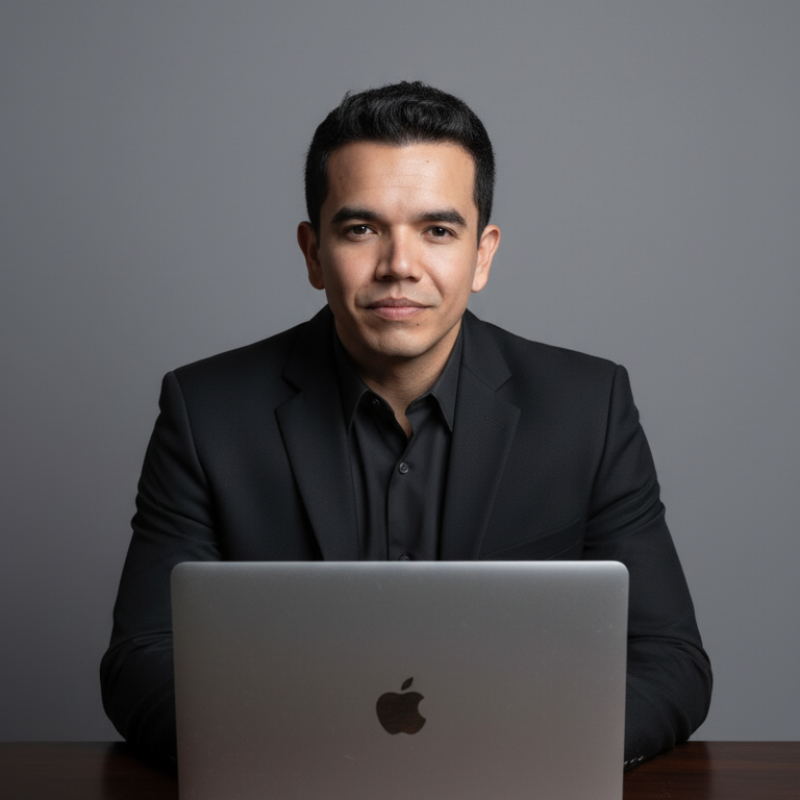
Carlos David Duarte
Senior Software Engineer · Technical Lead
Most people told me it was a bad idea. Two master's degrees at the same time, both running in parallel with a full-time role as a Senior Software Engineer at Zurich Insurance. On paper, it looked like a scheduling problem waiting to explode.
It wasn't a scheduling problem. It was a deliberate architectural decision about my career.
The strategy behind the choice
By mid-2024 I had a clear picture of where I wanted to go: from Senior Software Engineer and Technical Lead toward Solution Architecture. The path requires two things that rarely come packaged together — deep technical execution and broad organizational thinking.
Most engineers I know pick one side. They go deep technically and struggle when they need to communicate with stakeholders, justify architecture decisions to management, or navigate enterprise governance. Or they shift toward management and gradually lose touch with the technical realities of the systems they're supposed to be leading.
I wanted both, at the same time, so they could reinforce each other.
UNIR México — Master's in Software Development and Operations (DevOps) gave me the technical side: CI/CD pipelines, cloud infrastructure, delivery optimization at enterprise scale. It deepened the engineering vocabulary.
Universidad Tecmilenio — Master's in IT Management gave me the other half: IT strategy, enterprise governance, the management of technology-driven organizations. It taught me to read a room of executives and translate technical complexity into business language.
Running both simultaneously wasn't reckless. It was intentional. Every week I was learning to think like an architect in one program and like a CTO in the other. The overlap was the point.
What the calendar actually looked like
From June 2024 to March 2026 — 21 months — I was managing:
- A full-time engineering role at Zurich Insurance as Technical Lead and Application Owner
- Synchronous coursework and exams at UNIR
- Project deliverables and evaluations at Tecmilenio
- My own professional development roadmap on the side
The programs had different rhythms. UNIR ran on a modular exam schedule — concentrated evaluation periods where you absorbed, practiced, and tested in defined windows. Tecmilenio ran on project-based delivery — each module culminated in a final project that required research, synthesis, and professional-quality output.
When those cycles aligned, things got intense.
The weeks that tested the strategy
There were several moments where I questioned whether the plan was sustainable.
The hardest stretches came when final project deadlines at Tecmilenio landed in the same weeks as UNIR exam periods — and both overlapped with delivery cycles at work. Not occasionally. Repeatedly.
Those weeks had a specific texture: mornings for work, evenings for study, weekends split between writing academic deliverables and reviewing technical content for exams. Sleep was a variable that got compressed first. Focus was the thing I had to protect most deliberately.
What made it manageable wasn't discipline alone — it was sequencing. I learned quickly that trying to context-switch between academic modes in the same evening was ineffective. A technical exam requires a different cognitive state than writing a strategic IT management proposal. I started batching by type: technical study blocks, writing blocks, work blocks. Mixing them produced mediocre output across all three.
The other thing that helped was accepting that "good enough" is a real strategy. Not every assignment needed to be a masterpiece. Not every exam needed a perfect score. The goal was sustained progress across 21 months, not peak performance on any single week.
What the combination actually produced
By the time both programs concluded in March 2026, the investment had compounded in ways that wouldn't have happened sequentially.
The IT Management program gave me frameworks to justify technical decisions in business terms. I stopped defending architecture choices with technical arguments alone and started framing them in terms of risk, cost, governance, and strategic fit. That shift changed how I communicate with stakeholders at Zurich.
The DevOps program sharpened the engineering credibility behind those conversations. You can talk about cloud governance all day, but if you can also design the CI/CD pipeline that makes it real, the conversation lands differently.
Running them simultaneously meant I could test ideas from one program against the reality I was living in the other. An enterprise governance framework from Tecmilenio applied immediately to the CI/CD transformation I was leading at work. A cloud architecture pattern from UNIR reframed a management decision I was navigating at Tecmilenio. The programs weren't parallel — they were in constant dialogue.
What I'd tell someone considering the same
If you're thinking about pursuing multiple graduate programs simultaneously, the honest advice isn't "don't do it" or "go for it." The honest advice is: be specific about why the combination matters more than the sequence.
If the two programs reinforce each other — if the overlap is the point — then the cognitive cost is an investment, not just overhead. You're not doing twice the work; you're building something neither program could give you alone.
If you're doing it for speed, or because the timing aligned, or because it seemed efficient — that's a different story. The overlap will feel like friction instead of signal.
For me, the combination was the strategy. The 21 months were hard. They were also exactly the foundation I needed.
Both degrees concluded in March 2026. The official degrees are currently in administrative processing.
More articles
Writing on Java, Azure, DevOps, and engineering leadership.